Notes on Deathcare
Caring about a Different Kind of Care

When I launched Aging in America News last year, I knew I was taking on an issue with lots of unfamiliar territory. Bella Bromberg’s contributions to the publication have been especially eye opening on the subject of deathcare. Like me, she’s also attuned to the power of music. Here are five passages that stand out for me.
“A 2022 study of elderly men with mild Alzheimer’s disease showed that consistent music therapy significantly reduced cortisol. It might also increase oxytocin, the hormone associated with social bonding…. Listening to music can also influence patient perceptions of their pain by triggering an endorphin release, research indicates. Dr. Salim Namour gained renown in the 2019 Oscar-nominated documentary ‘The Cave’ for playing classical music off his phone during wartime medical procedures. ‘We don’t have anesthesia, but we have music,’ he said.” (From “I Will Not Leave You Comfortless”)
“For many end-of-life patients, music also encourages the kind of conversations and expressions that matter most. Amy Clements-Cortés, a music therapist and researcher at the University of Toronto, describes this as ‘relationship completion’ – the expression of important sentiments between people when one is nearing death.” (From “You Are My Sunshine”)
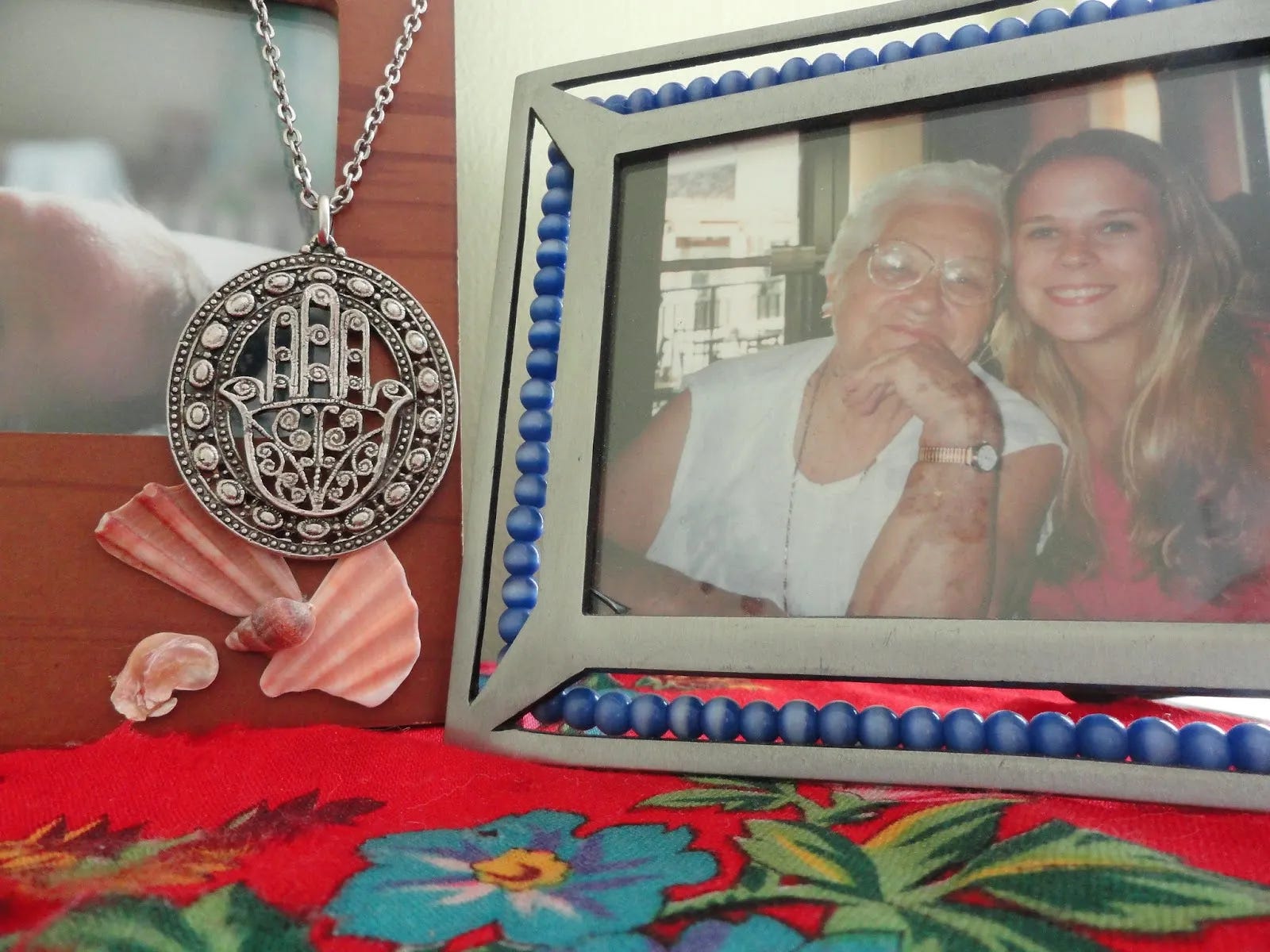
This photo of Jill McClennen and her grandmother rests on McClennen’s altar. Photo courtesy of Jill McClennen.
“With her husband’s job in food imports destabilized by tariffs in early 2025, [Jill] McClennen was now seeking full-time employment, ideally in elder care. The emotional labor she provided at the end of life as a doula, she had learned, was not considered billable care.” (From “Everyone Wants to Be a Death Doula.” part 1)
“What [Lisa] Nierenberg provides in hospice settings often never appears in a medical record. ‘Calmness. Tranquility. This is normal. We expect this,’ she said. ‘People are so much more relaxed when they feel like someone is in charge who’s been there, done it, and can reassure them and listen to them,’ she said. She frequently tells families, ‘You’re suffering more pain than your loved one is’.” (From “Everyone Wants to Be a Death Doula.” part 1)
“For [Kelly] Butler, taking care of the dead should be a natural role humans and communities take on: an opportunity to serve rather than a job. ‘If we turn it into something that has to require an exam, we are going to penalize the very people who never forgot the practice, and then make something that they’ve always done inaccessible to them,’ she said.” (From “Everyone Wants to Be a Death Doula.” part 2)